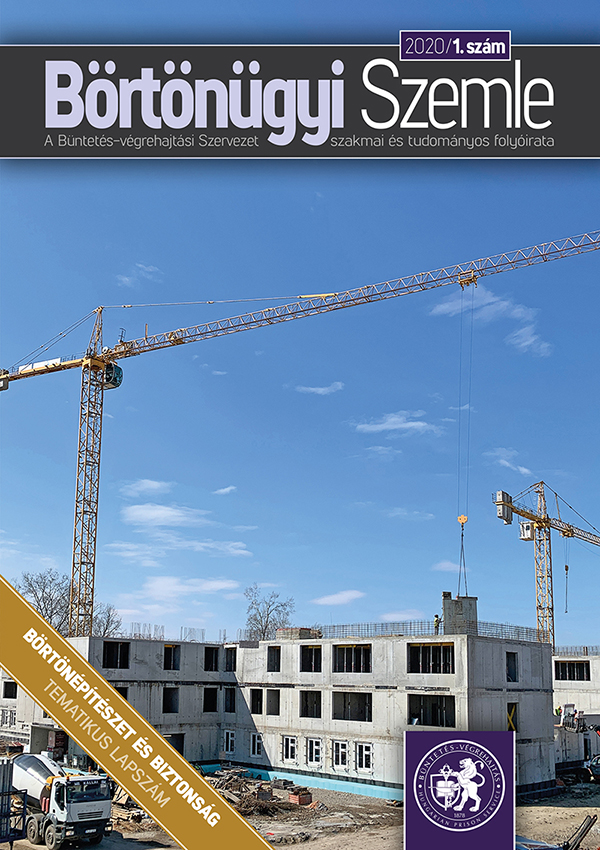
Interview with Dr. Andrea Dúll about her “Safe prisons – Environmental psychological considerations” presentation, held at a conference
Abstract
In prisons the physical environment is a very important topic, traditionally primarily in terms of security and functionality. Environmental psychological analyses of stressful and affectively intensive prison environments show that psychosocially supportive design is essential in health promotion of prisoners and staff. Psychosocially supportive design of prisons is not against security, but it can play a significant role in facilitatation of prisoners’ reintegration to society, and also can enhance the mental and physical well-being of prison staff.
References
Altman, Irwin (1975): The environment and social behavior. Privacy, personal space, territory and crowding, Brooks/Cole, Monterey.
Boros János – Csetneky László (2002): Börtönpszichológia, Rejtjel Kiadó, Budapest
Dilani, Alan (2015): Psychosocially supportive design – A health promoting approach on prison environments, Karolinska Institutet, Sweden.
Dúll Andrea (2009): A környezetpszichológiától a környezeti kommunikációig. In Dúll, A. A környe-zetpszichológia alapkérdései – Helyek, tárgyak, viselkedés, L’Harmattan Kiadó, Budapest
Hall, Edward T. (1966/1975): Rejtett dimenziók, Gondolat Kiadó, Budapest
Kara László (2017): Bűnmegelőzés építészeti eszközökkel, Lechner Nonprofit Kft., Budapest
Wener, Richard, E. (2012): The Environmental Psychology of Prisons and Jails: Creating Humane Spaces in Secure Settings, Cambridge University Press, Cambridge
Wener, Richard, E. – Olsen, R. (1980): Innovative correctional environments. A user assessment. Environment and Behavior, 12, 4, p. 478-493.