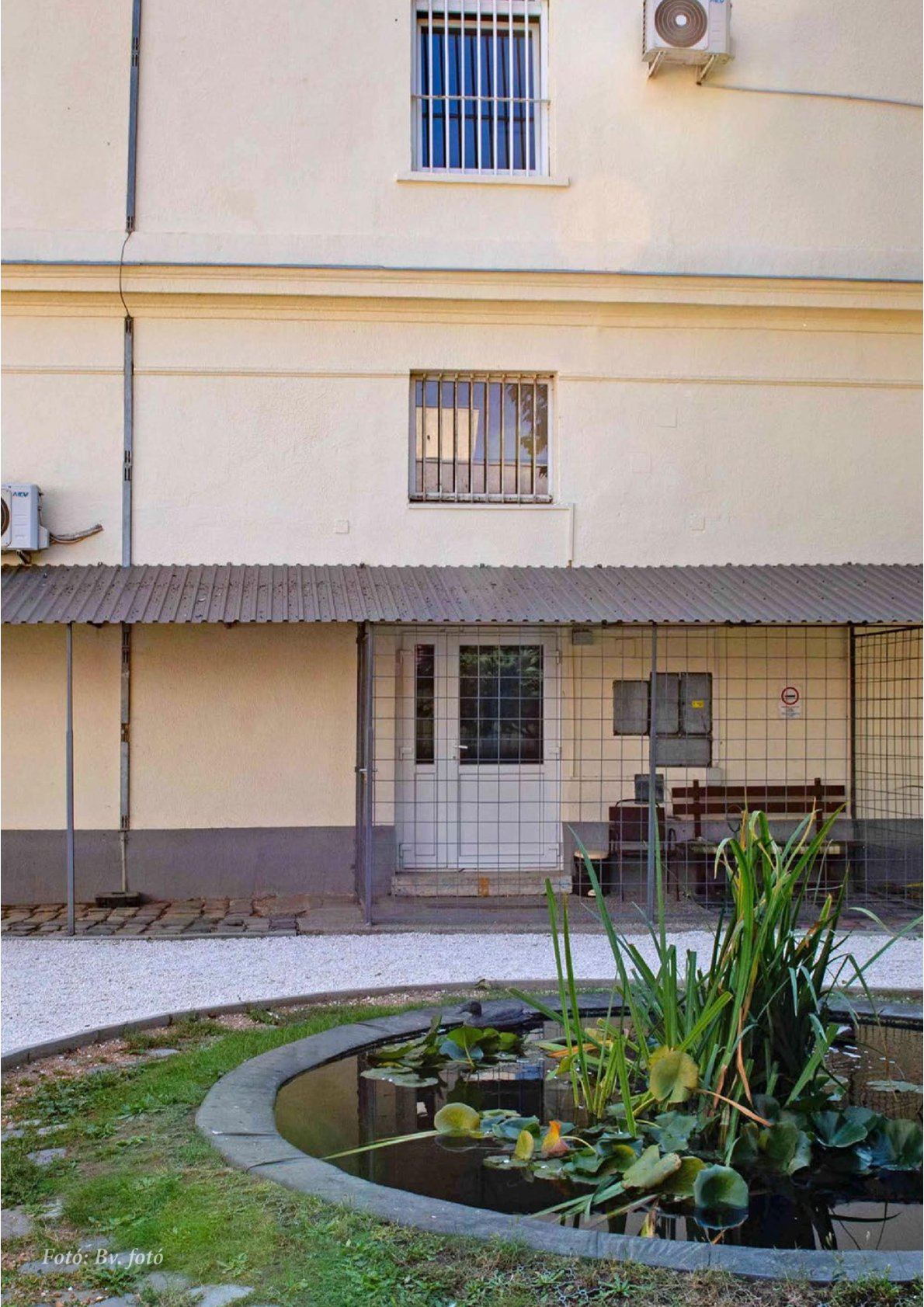
Ecopsychology in prison
Abstract
In prison institutions, inmates are deprived not only of social interactions and freedom of action, but also of contact with nature. One of the goals of ecopsychology is to restore the relationship between humans and nature, which has shifted in a pathological direction. A harmonious relationship between humans and nature could be the key to addressing the ecological crisis. The prerequisite for empathy with nature is the development of spontaneous loyalty. In the case of inmates, „nature deficit disorder” can be a problem. Integrating ecopsychology into psychological processes with inmates may reduce the stress caused by incarceration. In my case study, I present a section of a psychological process carried out with an inmate serving a long-term sentence.
References
Abram, David (1996): The spell of the sensuous: perception and language in a more-than-human world. Pantheon Books, New York
Albrecht, Glenn (2011): Chronic Environmental Change: Emerging 'Psychoterratic' Syndromes. In: Weissbecker, I. (szerk.): Climate Change and Human Well-Being, International and Cultural
https://doi.org/10.1007/978-1-4419-9742-5_3
Psychology, Springer, New York. DOI: https://doi.org/10.1007/978-1-4419-9742-5_3
Bach-y-Rita, George (1974): Habitual violence and self-mutilation. The American Journal of Psychiatry, 131(9), p. 1018-1020. DOI: https://doi.org/10.1176/ajp.131.9.1018
Beck, Aaron (2014): Aaron Beck on Cognitive Therapy. Kanopy Streaming
Blair, Lewis J. (2013): Ecopsychology: Challenges for person-centered therapy. Person-Centered & Experiential Psychotherapies, 12(4), p. 368-381.
https://doi.org/10.1080/14779757.2013.855134
Boros János - Csetneky László (2002): Börtönpszichológia. Rejtjel Kiadó, Budapest
Brehm, Jack W. (1966): A theory of psychological reactance. Academic Press, New York
Goffman, Erving (1961): Asylums: Essays on the social situations of mental patients and other inmates. Doubleday (Anchor)
Gomes, Mary E. - Kanner, Allen D. (1995): The rape of the wellmaidens: feminist psychology and the environmental crisis. In: Roszak, T. - Gomes, M. E. - Kanner, A. D. (szerk.): Ecopsychology: restoring the earth, healing the mind, Sierra Club Books, p. 111-121.
Hogan, Robert (1969): Development of an empathy scale. Journal of Consulting and Clinical Psychology, 33(3), p. 307.
https://doi.org/10.1037/h0027580
Kiss Anna - Farkas Judit - Gyurkó Noémi (2021): Mentőöv érzelmi viharok esetére - érzelemszabályozás a gyakorlatban. Második, bővített kiadás, Országos Mentális, Idegsebészeti és Ideggyógyászati Intézet - Nyírő Gyula Kórház
Lopez, Marayca (2014): How to build for success: Prison design and infrastructure as a tool for rehabilitation. Online: http://www.penalreform.org/blog/build-success-prison-design-infrastructure-tool-rehabilitation/ (Letöltés ideje: 2025. október 15.)
Louv, Richard (2008): Last child in the woods: Saving our children from nature-deficit disorder. Algonquin Books
Molnos Zselyke (2020): Az ökopszichológiai szemlélet és módszertan a pszichológiai tanácsadásban. Ökopszichológia Intézet, Budapest
Molnos Zselyke (2022): Mindennapi ökopszichológia. Ökopszichológia Intézet, Budapest46 Molnos Zs. (2020)
151 Börtönügyi Szemle 2025/2-3.Ökopszichológia a börtönben
Nadkarni, Nalini M. - Pacholke, Dan J. (2013): Bringing sustainability and science to the incarcerated:
The Sustainable Prisons Project. In: Values in sustainable development, Routledge, p. 235-243.
Naess, Arne (2009): The ecology of wisdom: Writings by Arne Naess. CatapultNeville, Bernie -
Tudor, Keith (2023): Eco-Centred Therapy: Revisioning Person-Centred Psychology for a Living World. Routledge
Niculita, Zenobia (2016): Emotii pe care nu le simtim. Online: http://www.sperantatv.ro/web/educatiepentru-viata-emotii-pe-care-nu-le-simtim-invitat-zenobia-niculita-07-12-2016/ (Letöltés ideje: 2025. október 15.)
Roszak, Theodore (1992): The voice of the earth: Discovering the ecological ego. The Trumpeter, 9(1).
Sallay Viola (2008): Az önmagunkra találás helyei: környezeti önszabályozás elmélet és kutatás tükrében. Alkalmazott Pszichológia, 10(3-4), p. 145-161.
Shepard, Paul (2011): Nature and madness. University of Georgia Press
Söderlund, Jana - Newman, Peter (2017): Improving mental health in prisons through biophilic design. The Prison Journal, 97(6), p. 750-772.
https://doi.org/10.1177/0032885517734516
Tringer László (1991): A gyógyító beszélgetés. Magyar Viselkedéstanulmányi és Kognitív Terápiás Egyesület
Wilson, Edward O. (1984): Biophilia. Harvard University Press
https://doi.org/10.4159/9780674045231
Zelenski, John M. - Desrochers, Jessica E. (2021): Can positive and self-transcendent emotions promote pro-environmental behavior? Current Opinion in Psychology, 42, p. 31-35. DOI: https://doi.org/10.1016/j.copsyc.2021.02.009