
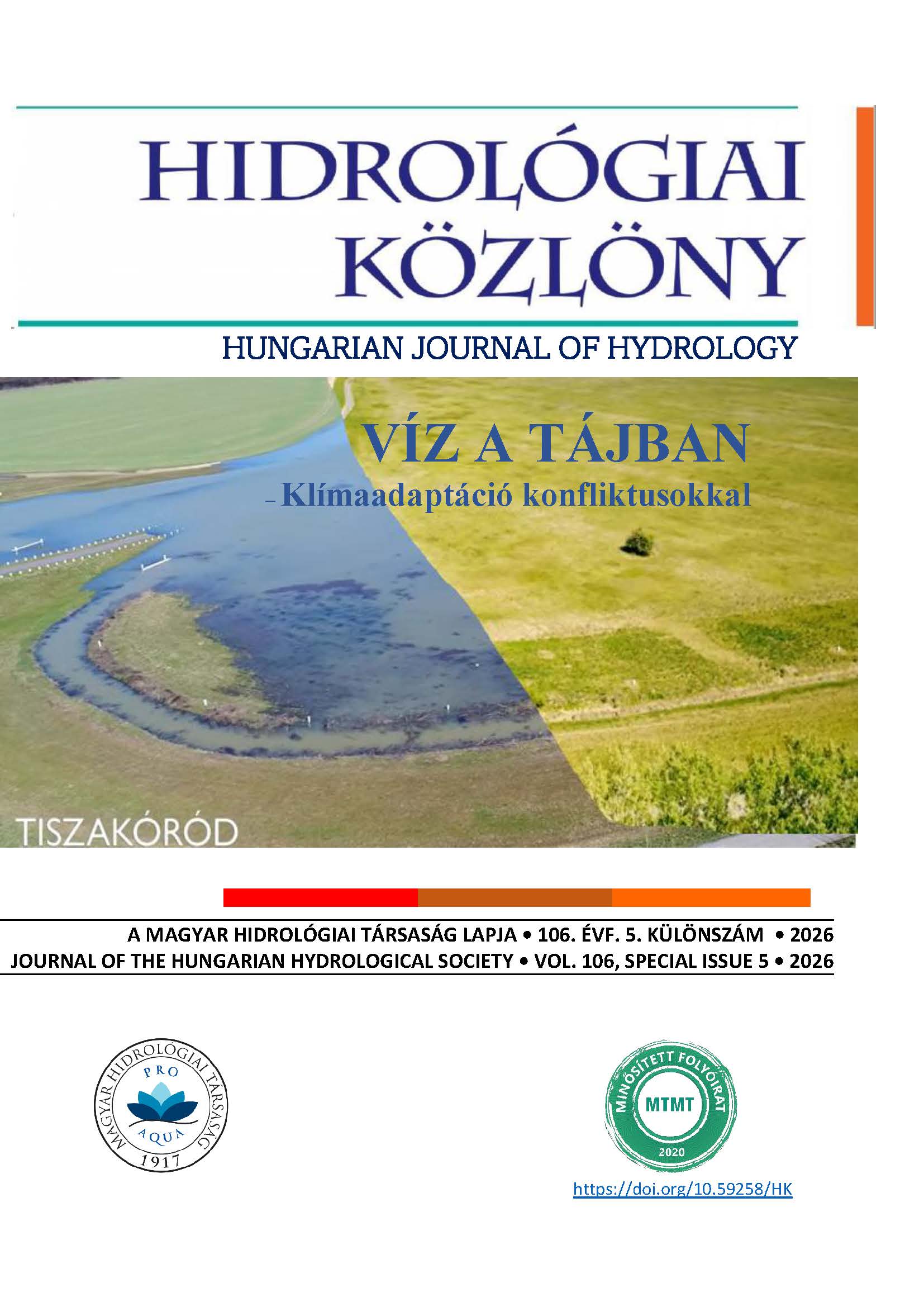
A „Vizet a Tájba!” program megvalósítása – Konfliktusok, kompromisszumok, megoldások
Absztrakt
A klímaváltozás következtében változnak a rendelkezésre álló vízkészletek. A fennálló, vagy növekvő vízigények kielégítése országos szinten is beavatkozásokat tesz szükségessé. A növekvő igényekkel szemben az elérhető vízkészletek csökkenése leginkább mezőgazdaság és a természetvédelem területén okozza a legsúlyosabb problémát. Míg a mezőgazdaság területén az egyre gyakoribb aszály miatt nő a vízigény, addig a természeti területeken, az aszály és a vízhiány miatt a vizes ökoszisztémák működéséhez, ökoszisztéma szolgáltatásuk megőrzéséhez szükséges a természetes vízigényük kielégítése. A vízgazdálkodás területén szükségszerűvé vált a vízkészletek rendelkezésre állásának kiegyenlítése, a szélsőségek kompenzálása érdekében. Figyelembe véve Magyarország földrajzi adottságait a lehetséges fejlesztésekre különböző megoldási lehetőségek kerültek előtérbe a dombvidékeinken, a hátságainkon és a folyóink ártéri területein. A vízvisszatartás szükségessége előtérbe helyez olyan megoldásokat, amelyeket újra kell értékelni egyrészt képességeik szerint, másrészt esetleges hátrányaik lehetséges kiküszöbölése érdekében. Mindezek az érintettek körében konfliktusokat okoznak, amelyek kiküszöbölése konszenzus mentén, de minimum kompromisszumok meghozatalával lehetséges
Hivatkozások
Hideg É., Mihók B., Gáspár J., Schmidt P., Márton A., Fabók V., Báldi A. (2018). Környezeti jövőkutatás – Magyarország 2050. Magyar Tudomány 2018/05. https://doi.org/10.1556/2065.179.2018.5.14
ICPDR (2017). Nemzetközi Dunavédelmi Bizottság ICPDR tokhalfaj-védelmi stratégiája. Bécs. https://doi.org/10.4324/9780203105160-16
Láng I. (2025). A „Vizet a tájba!” program szerepe a vizes élőhelyek rekonstrukciójában. Előadás kézirata.
Láng I.(2026). Fajmegőrzés és/vagy vízvisszatartás. Előadás kézirata.
Nemzetközi Rajnavédelmi Bizottság (1987). Rhine Action Programme (1987–2000) – Salmon 2000 Prog-ramme
Neufeld, D. (2022). Visualizing Carbon Storage in Earth’s Ecosystems, https://www.visualcapitalist.com/sp/visualizing-carbon-storage-in-earths-ecosystems/
Várallyay Gy. (2008) Talaj-víz kölcsönhatások a klímaváltozás tükrében, Talajtani vándorgyűlés
OVF (2018). Felszín alatti vizek adatbázis feldolgozás. Országos Vízügyi Főigazgatóság.
OVF (2022a). Vízgyűjtőgazdálkodási terv (VGT3). Tervdokumentáció. Országos Vízügyi Főigazgatóság.
OVF (2022b). Árvízi Kockázatkezelési Terv (ÁKK2). Tervdokumentáció. Országos Vízügyi Főigazgatóság.
OVF (2025). Talajvíz adatbázis feldolgozás – Országos adatbázis. Országos Vízügyi Főigazgatóság.
URL1. https://felszinalattiviz.blogspot.com/2020/06/uj-fogalmak-regiek-helyett-miert-idejet.html
Copyright (c) 2026 István Láng

This work is licensed under a Creative Commons Attribution-NonCommercial-ShareAlike 4.0 International License.