Investigation of Fractional CO2 Laser Treatment in an Ex Vivo Human Skin Model: A Novel Preclinical Experimental Approach
DOI:
https://doi.org/10.7188/bvsz.2026.102.5.5Keywords:
fractional CO2 laser, ex vivo treatment, cultured skin models, wound closure, hematoxylin and eosin stainingAbstract
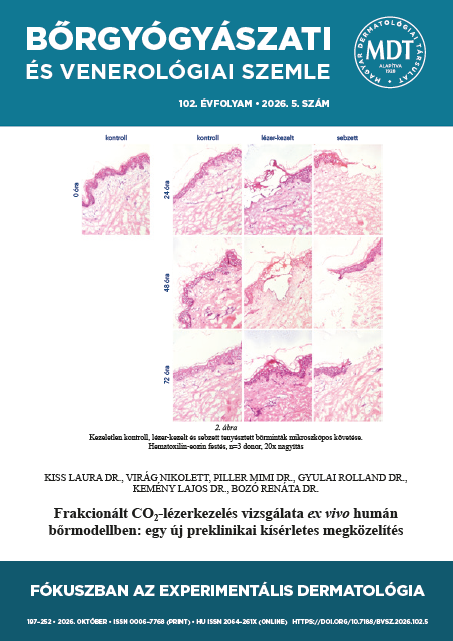
Fractional carbon dioxide (CO2) laser skin resurfacing treatments are considered one of the most significant technological innovations of the past two decades in the fields of clinical dermatology and aesthetic medicine. Unlike traditional ablative laser techniques, fractional technology splits the laser beam into microscopic columns, which results in controlled micro-injuries (microthermal zones) that promote faster regeneration and more effective wound healing without scarring. The molecular and
cellular mechanisms triggered by the fractional CO2 laser remain incompletely understood. A better understanding of the biological responses induced by laser treatment may contribute to a more accurate interpretation of the mechanism of action, thereby allowing the identification of new therapeutic indications and the further optimization of treatment protocols. We aimed to develop a human skin model suitable for studying the biological effects of ex vivo fractional CO2 laser treatment, while also providing an alternative to invasive sampling from patients.
Downloads
Published
Issue
Section
License

This work is licensed under a Creative Commons Attribution-NonCommercial-NoDerivatives 4.0 International License.