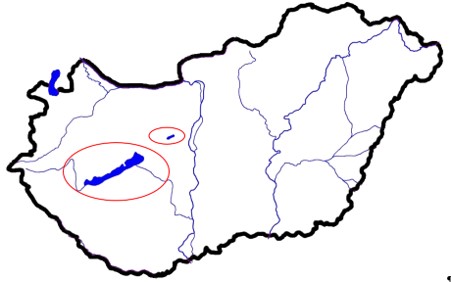
Sustainability challenges of Hungarian lakeside destinations – Lake Balaton and Lake Velence
Abstract
Lakeside settlements are among the tourist destinations most exposed to climate change and anthropogenic pressure. In landlocked Hungary, Lake Balaton and Lake Velence are key destinations, and in the summer of 2026 both saw a marked decline in visitor traffic. This paper examines how climate change, anthropogenic pressure and economic factors jointly affect the sustainability of the two destinations, and outlines regulatory directions for adapting their tourism. The study draws on recent scientific literature, statistics, the results of an earlier visitor survey and expert statements reported in the press. The findings show that rising water temperatures, more frequent heatwaves and droughts, falling water levels and deteriorating ecological status directly threaten the natural basis of bathing-based tourism, with Lake Velence being the most vulnerable. These effects are compounded by the overdevelopment of the shoreline and the degrading quality of reed beds. Demand is further weakened by economic factors such as the strong forint (HUF) and the growing attractiveness of foreign destinations. A fall of around 20% in hospitality turnover on the southern shore of Lake Balaton and in attendance at the main beach in Siófok, together with a 5.2% decrease in foreign guests at Lake Balaton, illustrates the problem. The paper concludes that preserving the tourist appeal of Hungarian lakes requires sustainable lake management, with special emphasis on the protection of shoreline habitats and restrictions on construction. Furthermore, the tourism offer should be diversified and regulations should facilitate the sustainable development of lakeside tourist destinations.
References
Boromisza, Zs., Harea, O. (2023). Climate risk of shallow touristic lakes: A case study of Lake Velence (Hungary). Journal of Engineering Science. 30(3), 121–133. DOI: https://doi.org/10.52326/jes.utm.2023.30(3).08
Csóti, R. (2026). Egész nyáron a vizet kerestük – mutatjuk, mit láttak a 24.hu fotósai a száradó folyóink és tavaink partjainál [We spent the whole summer looking for water – what 24.hu’s photographers saw on the banks of our drying rivers and lakes]. 24.hu, 9 September 2026. URL: https://24.hu/tudomany/2026/09/09/balaton-duna-szarazsag-aszaly (Downloaded: 13 September 2026)
Erős, T., Vasas, G. (2026). Mi lesz veled, Balaton? A tó vízminősége, ökológiai állapota és fenntartható használata [What will become of you, Lake Balaton? The water quality, ecological status and sustainable use of the lake]. Magyar Tudomány. 187(8), 1140–1153. DOI: 10.1556/2065.187.2026.8.6
Gössling, S., Scott, D. (2026). Tourist demand and destination development under climate change: complexities and perspectives. Journal of Sustainable Tourism. 34(5), 1193–1223. DOI: 10.1080/09669582.2025.2543953
Gyurkó, Á., Csegődi, T. L. (2024). Fenntartható turizmus és területfejlesztés a Balaton térségében [Sustainable tourism and regional development in the Balaton region]. In: Csugány, J., Szlávik, J. (eds.). Globális, lokális kihívások és válaszok [Global and local challenges and responses]. Eszterházy Károly Katolikus Egyetem Líceum Kiadó, Eger. 55–72. DOI: 10.46403/Globalis.2024.55
Hübner, A., Ioannides, D. (2026). A destination perspective of tourism and climate change knowledge. Tourism Recreation Research. 51(5), 1632–1652. DOI: 10.1080/02508281.2025.2538241
Infostart (2026a). Flesch Tamás: változik a turizmus az éghajlatváltozás miatt, Budapestet feljebb kell pozicionálni [Tamás Flesch: tourism is changing due to climate change, Budapest must be positioned higher]. Infostart.hu, 3 September 2026. URL: https://infostart.hu/belfold/2026/09/03/flesch-tamas-valtozik-a-turizmus-az-eghajlatvaltozas-miatt-budapestet-feljebb-kell-pozicionalni (Downloaded: 5 September 2026)
Infostart (2026b). Kicsit kevesebb vendég kicsit több időt töltött a szállásokon júliusban [Slightly fewer guests spent slightly more time at accommodation establishments in July]. Infostart.hu, 2 September 2026. URL: https://infostart.hu/gazdasag/2026/09/02/kicsit-kevesebb-vendeg-kicsit-tobb-idot-toltott-a-szallasokon-juliusban (Downloaded: 4 September 2026)
Járdi, R. (2026). Katasztrófa, ami idén nyáron a Balatonon történik: az erős forint miatt elárasztják Horvátországot a magyarok – 15-20 százalékos forgalom-visszaesésről beszélnek a vendéglátósok [The catastrophe happening at Lake Balaton this summer: because of the strong forint, Hungarians are flooding Croatia – hospitality businesses report a 15–20 per cent fall in turnover]. Világgazdaság, 25 July 2026. URL: https://www.vg.hu/vilaggazdasag-magyar-gazdasag/2026/07/balaton-nyar-vendeglato-eros-forint-adria-horvat (Downloaded: 2 September 2026)
KSH (2026). Turisztikai szálláshelyek forgalma, 2026. július [Tourist accommodation turnover, July 2026]. Gyorstájékoztató [First release]. Központi Statisztikai Hivatal [Hungarian Central Statistical Office], Budapest, 2 September 2026. URL: https://www.ksh.hu/gyorstajekoztatok/tsz/tsz2607.html (Downloaded: 13 September 2026)
Kun, Zs. (2022). A balatoni nádas nem pusztul, hanem pusztítják [The reed beds of Lake Balaton are not dying – they are being destroyed]. Qubit, 2 September 2022. URL: https://qubit.hu/2022/09/02/a-balatoni-nadas-nem-pusztul-hanem-pusztitjak (Downloaded: 13 September 2026)
Mann, D., Hagglund, P., Pizam, A., Aleshinloye, K., Hara, T. (2025). Iterative impacts of climate and tourism: Policy, practice, and pathways for sustainable development. Journal of Global Sustainability and Development. 2(2), 65–80. DOI: 10.57017/jgsd.v2.i2.04
Pénzcentrum (2026). Kiderült a balatoni szezon sötét titka: tömegesen maradoznak el a külföldi turisták [The dark secret of the Balaton season revealed: foreign tourists are staying away in large numbers]. Pénzcentrum, 2 September 2026. URL: https://www.penzcentrum.hu/utazas/20260902/kiderult-a-balatoni-szezon-sotet-titka-tomegesen-maradoznak-el-a-kulfoldi-turistak-1204797 (Downloaded: 13 September 2026)
Robak, R. – Робак, Р. (2026). Оцінка вразливості туристичних дестинацій Тернопільщини до кліматичних змін та антропогенного навантаження [Vulnerability assessment of tourist destinations in Ternopil region to climate change and anthropogenic pressure]. Наукові записки Тернопільського національного педагогічного університету імені Володимира Гнатюка. Серія: географія – Scientific Notes of Ternopil Volodymyr Hnatiuk National Pedagogical University. Series: Geography. 62(2), 152–158. DOI: 10.25128/2519-4577.26.2.15
Sági, T., Buzási, A. (2024). Assessing heatwave resilience in municipalities around Lake Balaton: A comparative analysis. Hungarian Geographical Bulletin. 73(3), 269–282. DOI: 10.15201/hungeobull.73.3.4
Tóth, V., Li, H. (2025). Vészesen felgyorsult a Balaton vizének melegedése, turbulens változások jönnek az élővilágban [The warming of Lake Balaton’s water has accelerated alarmingly; turbulent changes are coming in its ecosystem]. Másfélfok, 4 June 2025. URL: https://masfelfok.hu/2025/06/04/melegedo-balaton-okologia/ (Downloaded: 4 July 2026)
Turizmus.com (2026). Katasztrofális helyzetbe kerültek a velencei-tavi vendéglátósok [Hospitality businesses at Lake Velence find themselves in a catastrophic situation]. Turizmus.com, 3 August 2026. URL: https://turizmus.com/cikk/vendeglatas/katasztrofalis-helyzetbe-kerultek-a-velencei-tavi-vendeglatosok (Downloaded: 13 September 2026)
Varga, S. (2026). Szinte világít a Velencei-tó zöld vize [The green water of Lake Velence is almost glowing]. Időkép, 1 July 2026. URL: https://www.idokep.hu/hirek/szinte-vilagit-a-velencei-to-zold-vize (Downloaded: 5 July 2026)
Világgazdaság (2026a). Durva válságban a Balaton: minden ötödik vendég eltűnt – a polgármester idén 170 millió forintos bevételkieséssel számol [Lake Balaton in severe crisis: one in five guests has disappeared – the mayor expects a revenue loss of HUF 170 million this year]. Világgazdaság, 19 September 2026. URL: https://www.vg.hu/vilaggazdasag-magyar-gazdasag/2026/09/strand-turisztika-balaton-siofok-szallashely-ksh-vendeg (Downloaded: 25 September 2026)
Világgazdaság (2026b). Pont azt a részét verték szét a megalomán építkezésekkel a Balatonnak, ami a legfontosabb az élővilágnak: most még van esély megmenteni, de kompromisszumot kell kötni a természettel [Megalomaniac construction has destroyed precisely the part of Lake Balaton that matters most for wildlife: there is still a chance to save it, but a compromise must be reached with nature]. Világgazdaság, 24 September 2026. URL: https://www.vg.hu/vilaggazdasag-magyar-gazdasag/2026/09/balaton-viz-beepitett-klimavaltozas-aszaly-masfelfok (Downloaded: 25 September 2026)
Vízügy (n.d.). Operatív vízállások [Operational water levels]. Vízügyi honlap, OVF [General Directorate of Water Management]. URL: https://www.vizugy.hu/?mapModule=OpGrafikon&AllomasVOA=1649619E-97AB-11D4-BB62-00508BA24287&mapData=Idosor#mapModul (Downloaded: 29 September 2026)
Wirth, G. (2017). Helyi gazdaságfejlesztési lehetőségek a Velencei-tónál [Local economic development opportunities at Lake Velence]. PhD thesis. Szent István University, Gödöllő. DOI: 10.14751/SZIE.2017.040
Woolway, R. I., Zhang, Y., Jennings, E., Zohary, T., Jane, S. F., Jansen, J., Weyhenmeyer, G. A., Long, D., Fleischmann, A., Feng, L., Qin, B., Shi, K., Shi, H., Wang, W., Tong, Y., Zhang, G., Zscheischler, J., Ren, Z., Jeppesen, E. (2025). Extreme and compound events in lakes. Nature Reviews Earth & Environment. 6(9), 593–611. DOI: https://doi.org/10.1038/s43017-025-00710-w
Zöldy, M., Szalmáné Csete, M., Kolozsi, P. P., Bordás, P., Török, Á. (2022). Cognitive sustainability. Cognitive Sustainability. 1(1). DOI: 10.55343/CogSust.7