Upper Triassic sponge–microbe reef limestone in the basement of Pest Plain
Abstract
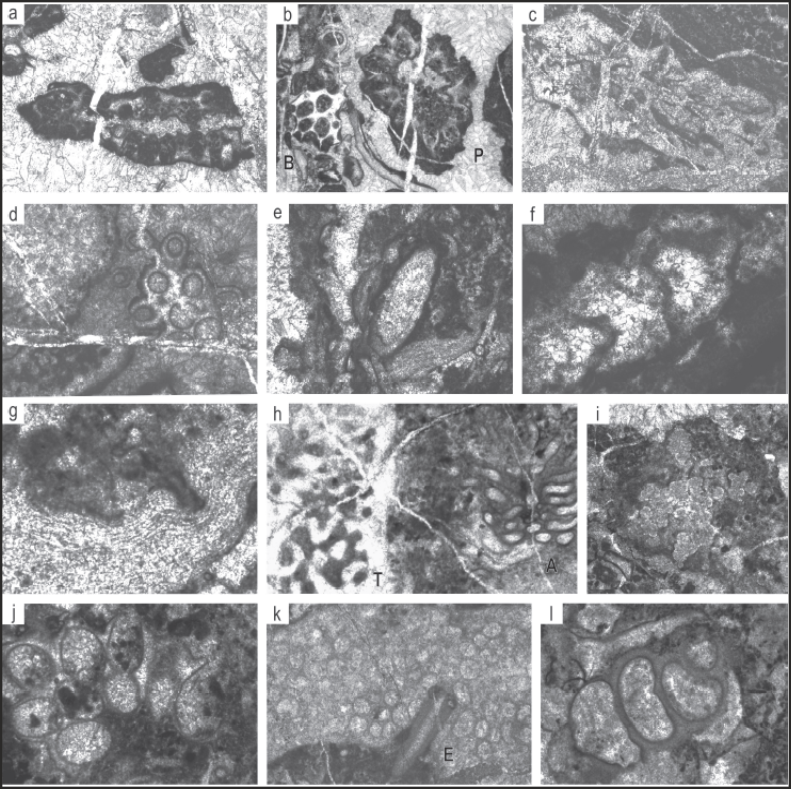
A geothermal production well, deepened in Budapest on the Pest Plain, hit a light grey limestone basement rock below Cenozoic formations. The study of a core sample taken from this rock revealed a rich and diverse fossil assemblage. The sedimentological investigations and fossil determinations enabled interpretation of the depositional environment and biostratigraphically constrained age assignment of the exposed rock. The limestone with a dominantly boundstone texture may have formed in a sponge–microbial reef environment. The fossil content of the rock indicates a Norian age, and based on its macro- and microfacies, it belongs to the Nézsa Member of the Dachstein Limestone Formation, which is known so far only in the Csővár Block (Danube Left-bank Block of the Transdanubian Range Unit).